One of the most valuable skills a person can develop is the ability to problem-solve. Not just react. Not just escalate. Not just hand the issue to someone else and wait for them to carry it. Real problem-solving means stopping, thinking, gathering information, and making a serious effort before asking for help.
That matters everywhere, but especially in IT.
In technology work, problems come nonstop. Systems break. Access fails. A process that worked yesterday suddenly does not work today. A cable is unplugged. A permission changed. A report is missing data. A meeting room refuses to cooperate five minutes before an event starts. The people who stand out are not the ones who never run into problems. They are the ones who know how to work through them.
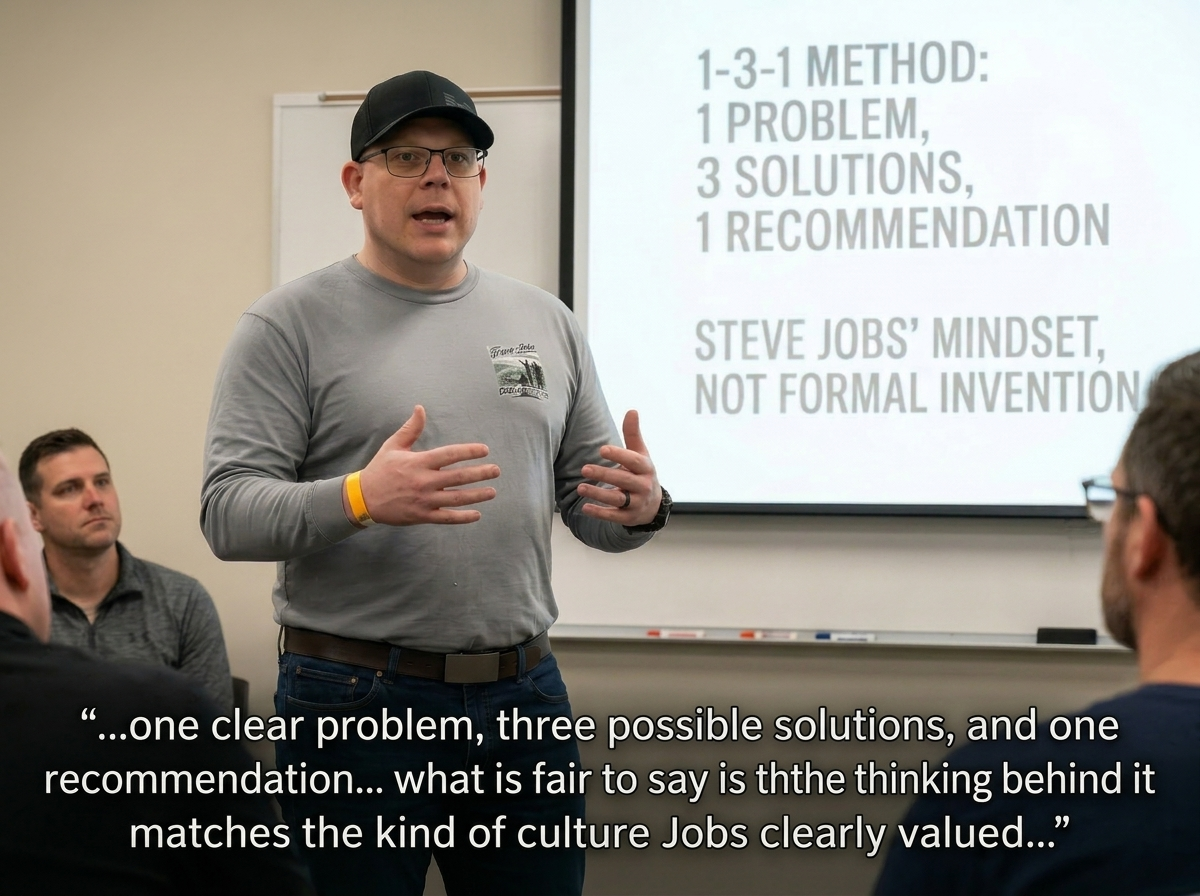
One framework I have always liked is the 1-3-1 method: bring one clear problem, three possible solutions, and one recommendation for the best path forward. The exact phrase gets attributed in different places, and I would be careful about saying Steve Jobs formally invented it. I have not found a clean primary source showing that he did. What is fair to say is that the thinking behind it matches the kind of culture Jobs clearly valued: one where smart people were expected to think, contribute, and help shape direction rather than just wait to be told what to do. The Steve Jobs Archive points directly to that broader mindset in his words and leadership philosophy.
That is probably why this idea has had so much staying power.
It works.
It works because it changes the posture of the person bringing the issue. Instead of saying, “Here’s my problem, now you solve it,” they are saying, “Here’s the issue, here’s what I found, here are three realistic paths, and here’s the one I think makes the most sense.” That is a completely different level of professionalism.
It shows ownership. It shows maturity. It shows respect for the other person’s time. It also makes it much easier for someone to help you, because they are not starting from zero. They are stepping into a situation where you have already gathered facts, narrowed possibilities, and thought critically about the next move.
Too many people want to skip that part.
They hit a roadblock and immediately look for someone else to solve it. They ask vague questions. They provide no context. They have not tested anything. They have not checked basic assumptions. They have not thought through what success even looks like. At that point, they are not really asking for help. They are asking someone else to do their thinking for them.
That gets old fast.
The truth is, most people are far more willing to help someone who has clearly put in the effort. Even when their proposed solutions are not perfect, effort earns respect. If someone says, “I checked the logs, compared permissions, tested from another machine, and I think it is probably one of these three things,” that tells me they are engaged. They are learning. They are trying. I will gladly invest time in that person.
On the other hand, if someone walks in with, “It doesn’t work,” and nothing else, they are making their lack of effort somebody else’s problem.
That is not a great habit in any profession, and it is especially damaging in IT, where independent thinking matters. Good IT staff, good leaders, and honestly good employees in general are not just task-doers. They are pattern-recognizers. They are troubleshooters. They are people who can look at a messy situation and start breaking it down into manageable pieces.
That skill does not just appear out of nowhere. It has to be practiced.
And there is some real weight behind that. Research highlighted by Harvard Business Review notes that teams often spend too little time properly defining the problem before jumping to a fix, and that rushed problem definition is a major reason decisions fail. In plain terms: people get into trouble when they move too fast, skip the thinking, and go hunting for answers before they have even framed the issue correctly.
Sometimes that means asking yourself a few basic questions before you escalate.
What exactly is the problem?
What changed?
What have I already tested?
What information am I missing?
What are a few possible ways to fix it?
Which option seems most practical, safest, or fastest?
That process alone improves the quality of your thinking.
It also helps you avoid becoming dependent on constant rescue. Nobody grows by being carried through every problem. Growth happens when you wrestle with the issue long enough to understand it, even if you still need help in the end. In fact, some of the best learning happens when you bring a thoughtful recommendation to someone more experienced and they explain why another option is better. Now you are learning from the comparison, not just receiving an answer.
That is a huge difference.
This mindset also builds trust. Leaders notice who brings problems and who brings options. Teammates notice who shows up prepared and who shows up empty-handed. Over time, that becomes part of your reputation. Are you someone who thinks? Or are you someone who waits to be told?
That may sound blunt, but it matters.
The people who move forward in their careers are usually not the people with the fewest problems. They are the ones who can work through complexity without immediately folding. They learn how to assess, prioritize, test, and recommend. They make life easier for the people around them because they do not create unnecessary drag.
Now, to be clear, this does not mean people should hide issues until they have every answer. There is a bad version of “bring me solutions, not problems” that can make people afraid to speak up early. Even Harvard Business Review has pointed out that leaders can create the wrong culture if employees feel they are not allowed to surface a problem until they have already solved it. That is not what I am talking about. The point is not silence. The point is effort. Speak up when needed, but do the homework you can before you drop the issue in someone else’s lap.
That balance matters.
Smart people ask for help all the time. They should. But there is a big difference between asking for help responsibly and asking someone else to take over because you did not want to think it through.
Do the legwork first.
Collect the facts.
Come up with options.
Decide what you think is best.
Then go talk to the person who can help.
That approach makes you more effective, more credible, and more valuable. It also builds a habit that will serve you far beyond IT. Problem-solving is not just a technical skill. It is a life skill.
And in a world full of people looking for shortcuts, the ability to think clearly, work the problem, and bring forward real options is still one of the things that sets people apart.