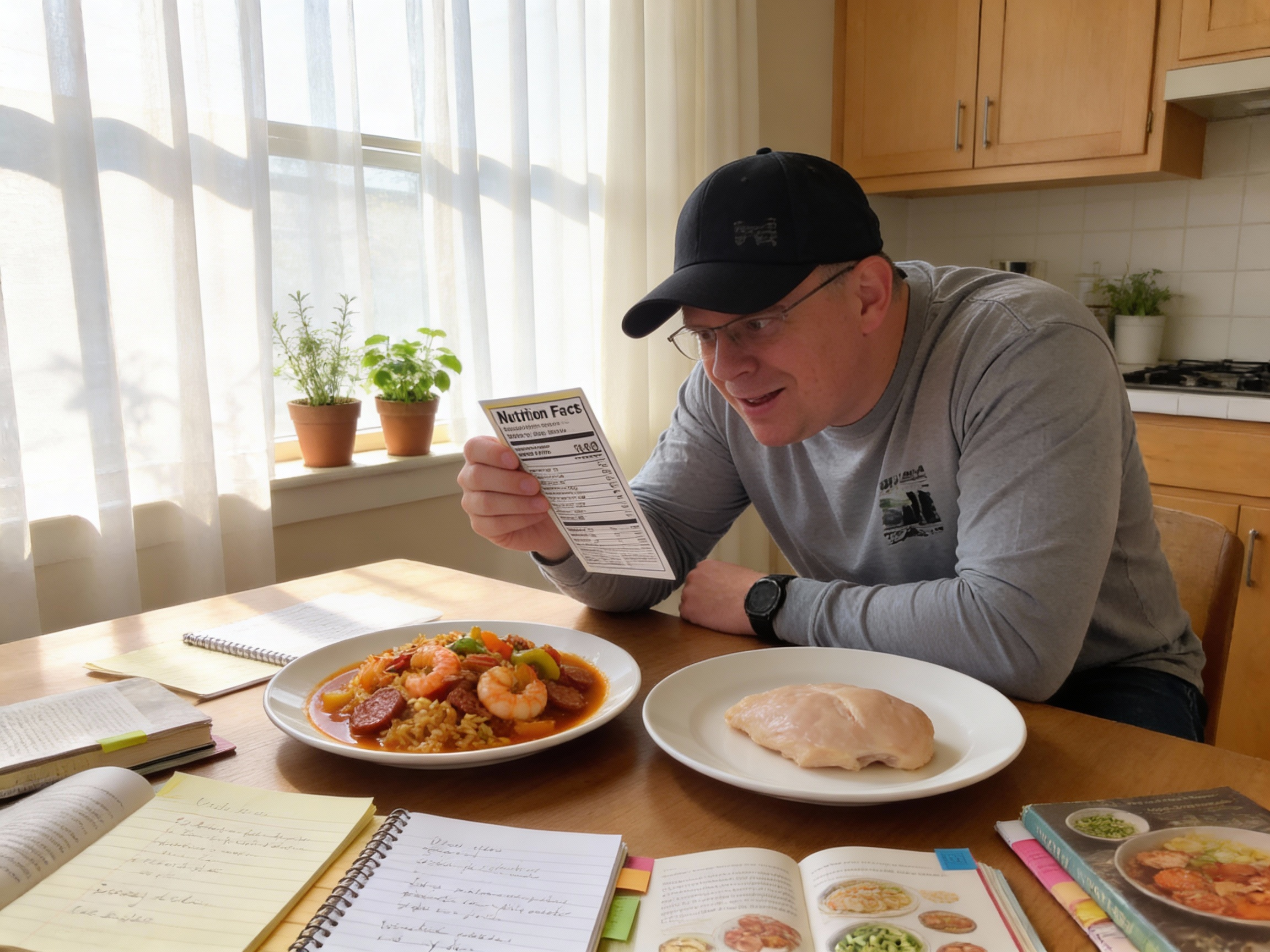
The Moment Food Didn’t Make Sense
For a long time, I thought food was supposed to be boring.
Not bad. Not offensive. Just… forgettable. Something you ate because it was there. Something you endured so you could move on to something better later—dessert, snacks, anything with sugar or crunch or flavor.
I didn’t grow up learning how to cook. I grew up learning how to fill a plate cheaply. And I didn’t realize until much later how much that shaped my relationship with food, hunger, and even my health.
This is the story of how I learned—slowly and sometimes painfully—that food wasn’t the problem.
My understanding of it was.
Growing Up With Food That Just Existed
I grew up in a Midwestern household where food was functional, not expressive.
Meals weren’t about flavor, curiosity, or pride in cooking. They were about getting calories on a plate for cheap. Seasoning wasn’t really a thing. If chicken was on the menu, it was often boiled and unseasoned. Vegetables were cooked until soft and bland. A lot of dinners came straight out of boxes. And when something was cooked, it was usually just mixing ingredients together—not layering flavors, not understanding seasoning, not building anything intentionally.
At the time, I didn’t know any different. That was just “food.”
But even as a kid, something about it never quite clicked.
Discovering Flavor by Accident
The first time I remember realizing food could actually taste good was on a Boy Scout trip. Someone made Zatarain’s jambalaya.
It was spicy. Savory. Bold. Different.
It wasn’t fancy or complicated, but it had flavor. Real flavor.
And that moment stuck with me.
I wanted to cook it all the time after that. Not because it was healthy. Not because it was “good for me.” But because it was satisfying. Eating it felt complete.
Looking back, that was probably the first crack in the foundation of how I understood food.
Why Dinner Never Felt Like Enough
Growing up, I always wanted sweets. I was constantly snacking. Cookies, candy, anything crunchy or sugary—I could mindlessly demolish it without thinking.
At the time, I assumed that was just normal kid behavior.
But in hindsight, I think a lot of it came from the fact that dinner was never satisfying. It filled your stomach, but it didn’t engage you. There was no pleasure, no sense of being done.
So after dinner, I kept looking for something else.
I didn’t understand it then, but bland food trains you to chase stimulation. If meals don’t deliver satisfaction, your brain goes hunting for sugar, salt, and quick dopamine.
Learning to Like Food by Learning to Cook It
As I got older, my tastes changed—but not automatically.
I didn’t suddenly start liking vegetables because I “grew up.” I started liking them because I learned how to cook them. Corn with seasoning. Vegetables roasted instead of boiled. Food with salt, fat, texture, and heat.
That realization mattered more than I expected:
I didn’t hate foods.
I hated how they were prepared.
Once I understood that, cooking stopped being about following instructions and started being about understanding flavor—how seasoning works, how heat changes things, how small choices stack up.
That realization quietly changed everything.
Exercise Was Easy. Diet Wasn’t.
For years, this confused me: I was good at exercise.
Running, lifting, pushing my body—that made sense. There were rules. Clear feedback. Clear progress.
Food never worked that way for me.
I could never stick to “dieting.” I wasn’t motivated. It always felt like restriction, punishment, or forcing myself through meals I didn’t enjoy.
Now I see why. My entire relationship with food was built on indifference at best and avoidance at worst. You can’t build discipline on something you fundamentally don’t respect.
When My Body Forced the Issue
Things changed when I started having serious stomach problems—bad enough to land me in the hospital.
That’s when doctors started pushing me to take food seriously. Not just “eat fruits and vegetables,” but actually pay attention to what I was eating and how it affected me. That eventually led me down the low-glycemic path.
At first, I was skeptical. I’ve always been a muncher. I could sit down and eat an entire package of cookies without even realizing it.
But when I started cutting back on heavily processed foods—especially breads, wraps, pizzas, and sugar-dense snacks—something strange happened.
I wasn’t hungry all the time.
I didn’t want more.
That honestly blew my mind.
Realizing What Food Was Doing to Me
For the first time, I could feel the difference between foods that made me want to keep eating and foods that actually satisfied me.
Processed carbs and sugars didn’t just give me energy—they triggered more desire. Low-GI foods, higher protein, better fats, and intentional seasoning made meals feel complete.
I wasn’t fighting myself anymore.
And that’s when I realized something uncomfortable: I had never been taught to choose food intentionally.
The Coupon Childhood Effect
We grew up thrifty. Coupons mattered. Price mattered. And I don’t fault that—it was survival and responsibility.
But there was a downside.
We bought what was cheapest or on sale, not what was best. No one flipped boxes over to read labels. No one talked about ingredients. No one discussed what food actually did to your body. Gardening wasn’t a thing. Food wasn’t a system—it was just something you consumed.
That mindset sticks with you longer than you think.
Rebuilding My Relationship With Food
Now, I’m actively reshaping how I think about food.
Not as comfort.
Not as reward.
Not as mindless filler.
But as something intentional.
Something that can taste good and support my body. Something that doesn’t leave me chasing the next snack. Something I actually respect.
This isn’t about perfection. It isn’t about purity or cutting everything out. It’s about awareness—about understanding that how I was raised around food shaped my habits, and that I don’t have to keep repeating them.
What I’ve Learned (The Hard Way)
Looking back, this wasn’t just a journey about food. It was about unlearning assumptions I didn’t even know I had.
Here’s what stuck:
- Bland food trains you to chase sugar.
That constant snacking wasn’t a lack of willpower—it was my body trying to get satisfaction it never got at meals. - I didn’t dislike foods—I disliked how they were prepared.
Most vegetables aren’t bad. They’re just treated badly. - Exercise is simple. Food is emotional.
Food is wrapped in childhood habits, scarcity thinking, comfort, and avoidance. Ignoring that emotional layer is why diets fail. - Processed foods don’t just feed you—they push you to eat more.
Once I felt real satiety, it was impossible to unsee how much modern food is designed to keep you reaching. - Being thrifty without being intentional has a cost.
Cheap food without understanding ingredients teaches you nothing about nourishment. - My body forced me to learn what my childhood didn’t.
I didn’t change because I wanted abs. I changed because my health broke down—and I finally listened.
Today, I’m still rebuilding my relationship with food. I’m not perfect. I still like comfort foods. I still enjoy treats. But now I understand why I choose what I choose—and how those choices affect me.
Food isn’t just something you eat.
It’s something you learn.
And for me, that lesson came later than it should have—but it finally stuck.