One of the biggest realizations I’ve had continuing down the rabbit hole of retro video scaling is this:
“480p” does not mean one fixed resolution.
It only means 480 vertical pixels. Everything else is negotiable—and modern scalers absolutely hate that ambiguity.
This is where a lot of retro setups quietly go sideways.
What “480p” Actually Means (and Why It’s Confusing)
When people say 480p, they usually assume a single, standardized format. In reality, there are multiple valid 480p formats, each tied to different eras, aspect ratios, and expectations.
The two most common 480p variants


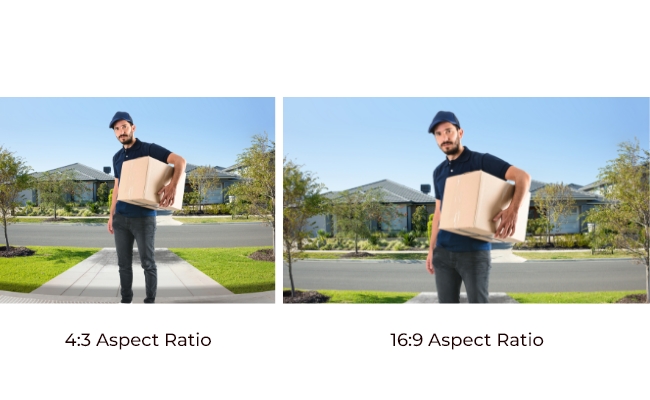
640 × 480 (4:3)
- Classic PC and early progressive video resolution
- Pixel-perfect upscale from 240p → 480p
- This is what devices like the RetroScaler 2X output when line-doubling NES, SNES, Genesis, etc.
- Mathematically clean, historically correct
854 × 480 (16:9)
- Widescreen DVD era
- Often mislabeled as “480p widescreen”
- Non-square pixel heritage
- Exists mostly to fill modern 16:9 displays
Both are “480p.”
They are not interchangeable.
Why Retro Consoles Naturally Land at 640×480


The NES (and most early consoles) rendered at 240p, locked to 4:3 CRTs.
A line doubler does the most honest thing possible:
- 240p × 2 = 480p
- Maintains original aspect ratio
- Produces 640 × 480
This is correct.
This is expected.
This is pixel-perfect.
And yet… modern scalers often don’t like it.
The Modern Scaler Problem: “Valid” ≠ “Expected”
Here’s where things get ugly.
Even when:
- EDID correctly reports 640×480
- A custom EDID is created
- The RetroScaler 2X explicitly outputs 640×480
Some scalers (including Extron units) still fight it.
Why?
Because many professional and modern scalers internally expect 720×480.
Why 720×480 keeps showing up

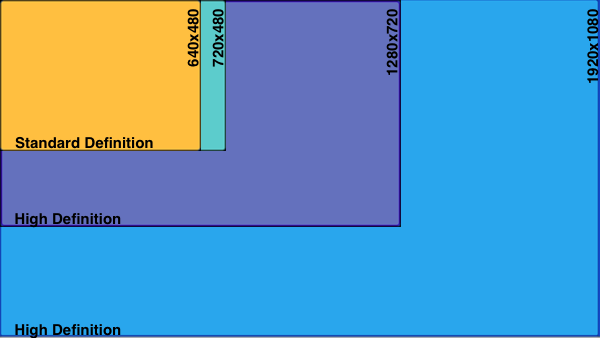
- 720×480 is the DVD / SD broadcast standard
- It assumes non-square pixels
- Scalers treat it as “safe” SD video
- Anything else starts triggering:
- Subtle horizontal scaling
- Phase misalignment
- Edge shimmer
- Pixel crawl
- Geometry drift
So even when the EDID says “640×480 is allowed”, the scaler’s internal pipeline is still nudging things toward what it expects SD video to be.
Result:
The math is right, but the picture isn’t.
Why This Breaks Alignment and Sharpness
Retro video relies on:
- Integer scaling
- Square pixels
- Exact sampling points
When a scaler assumes:
- 720 horizontal samples
- Non-square pixel math
- Broadcast-era timing models
You get:
- Softened pixels
- Uneven columns
- Shimmering edges
- Circles that aren’t round
- Text that looks almost sharp but never locks in
This is why it feels like:
“Everything is technically correct… but visually wrong.”
Because it is.
The Bigger Takeaway
We’ve spent the last 15–20 years standardizing around:
- 16:9
- 720p
- 1080p
- 4K
Those formats line up neatly.
Retro formats do not.
480p sits right in the middle of:
- CRT assumptions
- Broadcast standards
- PC resolutions
- Early widescreen transitions
And modern gear often collapses all of that nuance into:
“Eh… close enough.”
For retro gaming, close enough is not good enough.
Why This Matters for Retro Purists (and Why It’s Hard)
This is the real conundrum of modern retro gaming:
- The signal is valid
- The math checks out
- The EDID is correct
- The display accepts it
But the scaler pipeline was never designed for 240p lineage.
That’s why devices like the RetroScaler 2X, OSSC, and RetroTINK exist—and why they still hit walls once you bring professional or modern AV gear into the chain.
Final blunt truth
480p isn’t broken.
Modern expectations of 480p are.
And retro gaming sits right at the fault line between those two worlds.