I’ve always been a PC gamer first. Consoles were around—there’s an Xbox in the house—but if I had the choice, I’d sit at a desk with a keyboard and mouse. Games were cheaper on PC, ran better, and didn’t lock me into one ecosystem. That gap has only widened lately. When new console games are flirting with $80 a pop, I’m out unless it’s truly something special. Meanwhile, some of the most fun I’ve had gaming in years comes from $10–$20 indie titles I can play with friends.
There was another problem, though—modern games have largely abandoned local co-op. Split screen. Same couch. Two controllers. Playing together. That kind of experience is getting rare, and that’s exactly what I wanted back—especially to play with my wife. Steam still does this better than most, so the idea started forming: what if I built my own SteamOS-style console?
The Hardware Rabbit Hole
That’s when I stumbled onto a fascinating little Frankenstein board: the ASRock BC250 (also commonly referred to as BT250 in listings). From everything I read, it’s essentially a slightly cut-down PS5-class APU—six cores, twelve threads, and a surprisingly capable GPU. Not a monster, but more than enough for smooth 1080p gaming.
The plan was simple:
- Let the BC250 handle the game
- Let my Extron CrossPoint do the heavy lifting on 4K vector scaling
- End up with a clean, living-room-friendly console experience
Linux sealed the deal. A desktop in the background meant Discord, browser access, and all the flexibility I’m used to from Windows gaming—without Windows.
First Boot, First Problems
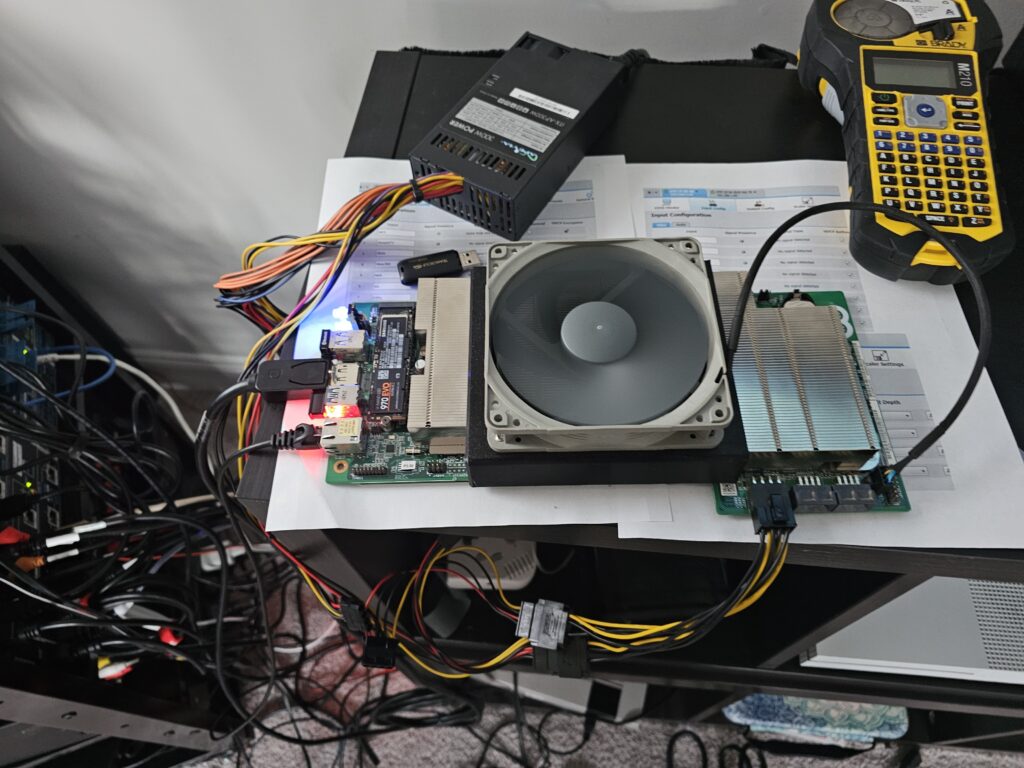
I grabbed the board, dug out a 300-ish watt Flex ATX power supply, and threw in some spare SSDs. Bench testing went great. I installed Bazzite, which is basically SteamOS with fewer handcuffs. Game mode up front, full Linux desktop when you need it. Perfect.
Then I noticed something…
This thing ran hot. Not “warm.” Not “a little spicy.” Mining-rig hot.
I upgraded the fan to an industrial Noctua. Better—but still not good enough. That’s when I realized the problem wasn’t just airflow, it was airflow direction. The stock heatsink was designed for server-style front-to-back airflow, not a compact console with a top-down fan.
So naturally, I grabbed a Dremel.
I cut channels into the heatsink so air could be pushed straight down and exhausted out both ends. Ugly? Maybe. Effective? Absolutely. On an open bench, temperatures finally made sense.
3D Printing Reality Check
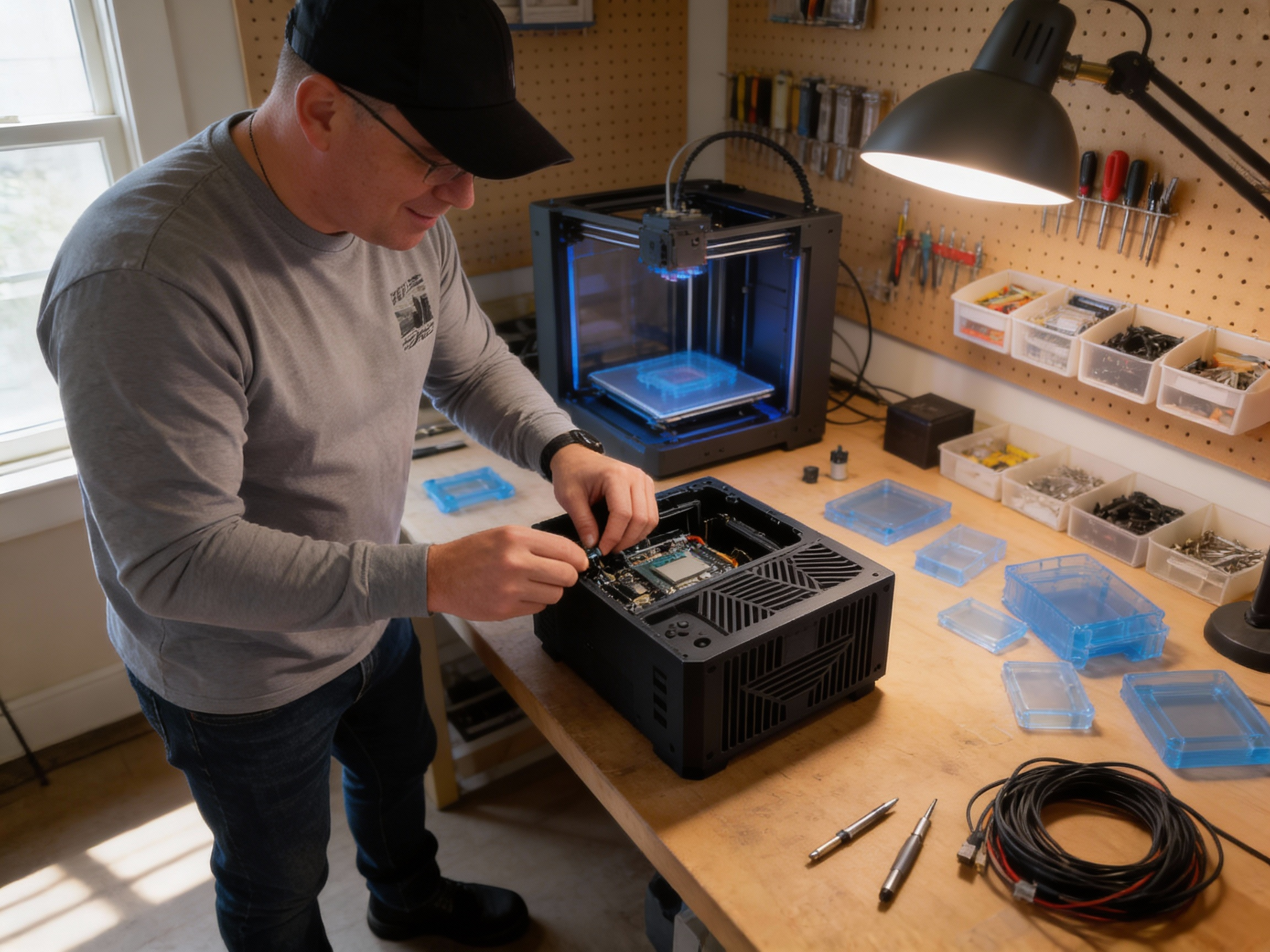
With a brand-new 3D printer sitting nearby, I did what any sane person would do: printed a case.
It looked great on Thingiverse. In reality?
Cables were tight. Airflow was marginal. The fan barely fit.
So I printed variations. Raised the fan mount. Let it poke through the top. Increased static pressure. Tweaked tolerances. It worked—until it didn’t.
Mid-game: black screen, hard crash.
After some troubleshooting, I’m pretty sure I starved the board for power and bricked the firmware. Lesson learned. I replaced the PSU with a proper 500-watt Flex ATX unit, but the damage was done. That board was toast.
Round Two (and Lessons Learned)
I ordered another BC250—and, because I clearly hate free time, also picked up Pico programmers and cables to see if I could eventually resurrect the dead one.
The new board came up clean. Games ran. But inside the original case, crashes kept happening. You could hear the fan screaming right before it died. The conclusion was obvious:
This case was never designed to cool this thing properly.
And honestly? It needed more than just cooling.
I wanted:
- More internal space
- Better airflow paths
- Bigger feet for bottom intake
- Front-accessible USB 3 (or at least a hub)
- A layout designed for this board, not a generic mini PC
Designing My Console
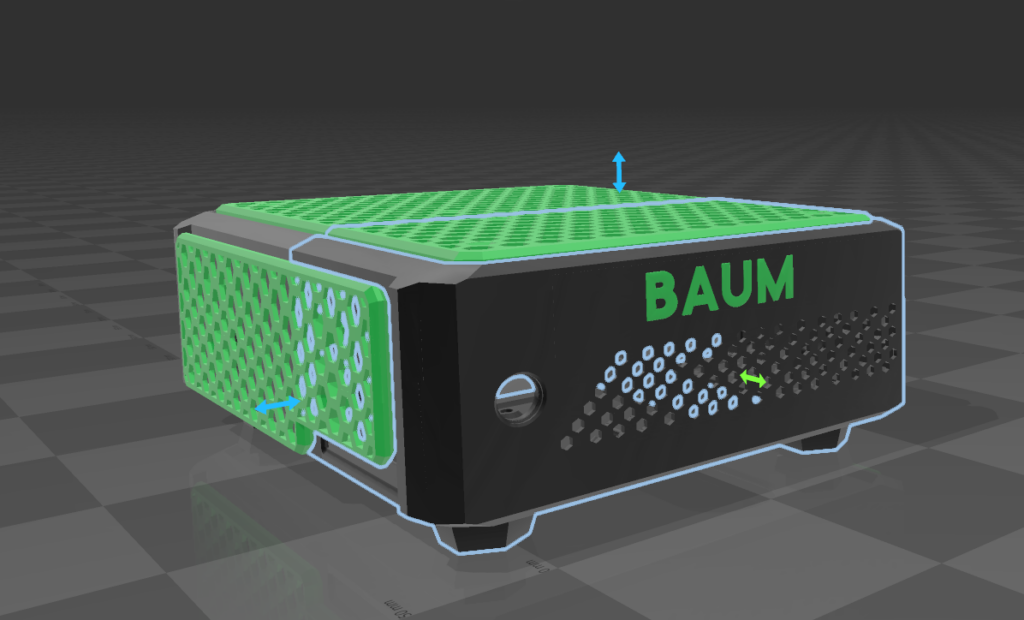
So I started remixing cases—literally. Borrowing ideas, cutting sections, adding vent patterns, raising the chassis, opening up airflow underneath, and giving heat somewhere to actually go.
That’s where I am now: iterating. Printing. Testing. Tweaking. Chasing the balance between thermals, noise, and reliability. The goal isn’t just “it works”—it’s a console I can trust, turn on from the couch, and forget about.
Was It Worth It?
Absolutely.
Despite the crashes, burned fingers, and one sacrificed motherboard, this has been one of the most satisfying tech projects I’ve done in a long time. I’ve already:
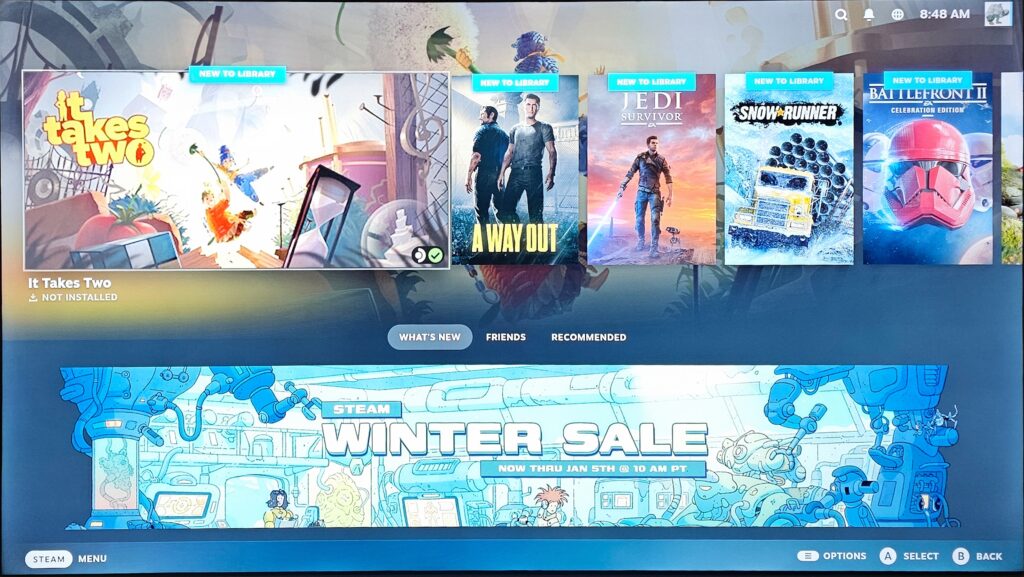
- Switched fully to controller gaming on it
- Played proper split-screen games with my wife
- Gotten exactly the living-room Steam experience I wanted
This isn’t a Steam Deck replacement. It’s not portable. It’s not polished.
But it’s mine—and it proves there’s still room for creativity in PC gaming outside whatever box the industry wants to sell you next.
And honestly? That’s half the fun.