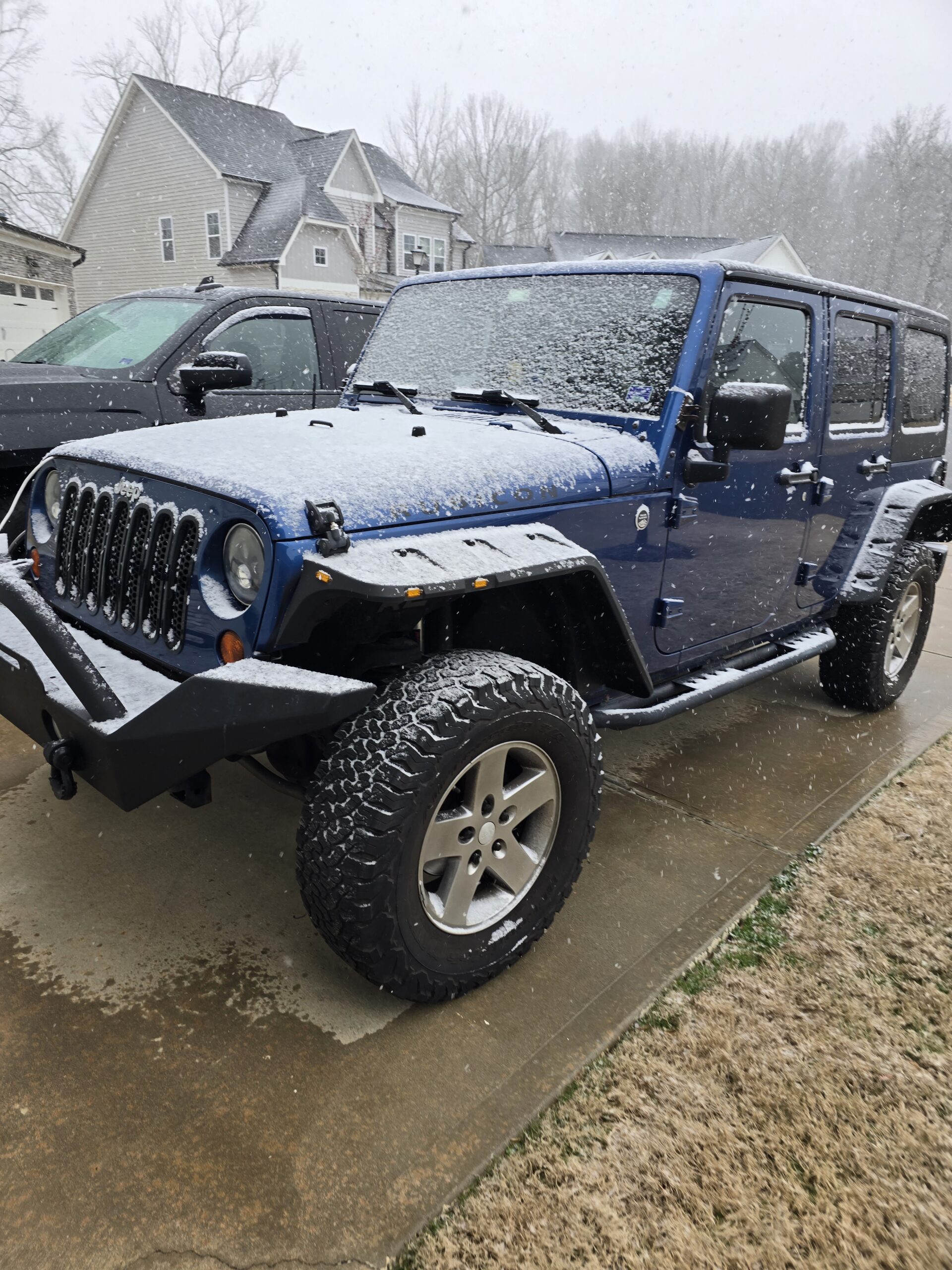
The Jeep didn’t stay stock for long. It never was going to. We didn’t build it to look cool in a parking lot—we built it to work, to protect, and to take us where we wanted to go without drama.
Some mods were about capability. Some were about safety. A lot were about fixing things Jeep did okay from the factory, but not great long-term.
The Front Bumper (and the Deer Test)
One of the very first changes was the front bumper. We swapped the factory setup for an all-steel push-bar style bumper with a winch mount—the one that’s still on it today.
That bumper has been:
- Pulled off
- Repainted
- Had brush guards removed and reinstalled
- Beaten on more than once
And it earned its keep.
Maranda hit a large deer with the Jeep. The bumper did exactly what it was supposed to do. She walked away. No injury. Minimal damage. That bumper paid for itself right there.
Suspension, Sway Bars, and Making It Drive Right
From the factory, the electronic sway bar disconnect was cool… until it wasn’t. Over time, it developed slop in the gears. Replacing it was expensive and not something we trusted long-term.
So we:
- Removed the electronic sway bar
- Installed a manual disconnect and stiffened front sway bar
The goal wasn’t rock crawling theatrics—it was stability at speed with larger tires. The Jeep immediately felt more predictable and planted.
Tires, Lift, and Shocks
The Jeep currently runs:
- 33” BFGoodrich KO2s, winter-rated
- 2-inch lift with a leveling kit
We installed the entire suspension ourselves and did the alignments. No shortcuts.
Shock setup:
- Bilstein shocks in the rear
- Upgraded adjustable reservoir shocks in the front
That front setup is one of my favorite mods. You can:
- Stiffen them up for long highway trips
- Reach under and soften them in minutes for off-road travel
No tools. No nonsense. It just works.
To make room for the reservoirs and gain clearance:
- Metal front fender liners
- Wheel spacers (not ideal, but necessary with the current wheels)
Long-term, we plan to move to wheels with the correct offset and ditch the spacers entirely.
Lighting and Exterior Updates
We modernized the outside without turning it into a mall crawler:
- LED headlights
- LED fog lights
- LED taillights
- Wider fender flares
Better visibility, better durability, less power draw.
Interior: Bringing It Out of the Stone Age
Inside, the goal was simple: make the Jeep usable without ruining what makes it a Jeep.
Upgrades include:
- Pioneer head unit with wireless Android Auto
- Google Maps, media casting, hands-free everything
- Storage trays up top
- Phone mounts and charging solutions
We also ran a ceiling cargo net for a long time. With the Freedom Tops off, it reduced wind buffeting and made long drives more comfortable.
The Custom Cargo Build (Where the Real Work Is)
This is where things got serious.
I custom-built a rear cargo shelf, wrapped in black automotive carpet. It’s designed so:
- Gear stores under the platform
- The top stays usable and flat
Underneath lives:
- Farm jack
- Full tool kit
- Spare parts
- Traction mats
- Winch gear
- Fridge/freezer
To support that, I installed a power control unit:
- Allows accessory power with the Jeep off
- Automatically cuts power if the battery drops too low
- Fully programmable logic
- Touch control panel mounted above the rearview mirror
We can hike, explore, come back hours later, and still have cold drinks waiting. No dead battery. No guessing.
Safety, Recovery, and Practical Stuff
Because reality happens:
- Medical bags strapped to the tailgate
- Backup camera added
- Recovery gear always accessible
Nothing flashy. Just prepared.
This Jeep isn’t built to impress strangers. It’s built to protect Maranda, to get us into the mountains, and to get us home every time.
Every mod has a reason.
Every change solved a problem.
And years later, we still wouldn’t change a thing—except maybe what we do next.