Some vehicles are just transportation. Others end up woven into your life. Ours was the second kind.
Maranda grew up in the mountains. I was born there, left for a while, then came back for college. That’s where we met. If you’ve lived in the mountains long enough—especially back when this story starts—you know that not every vehicle does well there. Automatics used to struggle unless they had a decent motor. Manuals were reliable, predictable, and gave you control when roads were steep, icy, or rough.
When I met Maranda, she drove a manual Volkswagen Beetle. And she could drive it. Forward, backward, hills, parking lots—it didn’t matter. She was confident, capable, and completely at ease behind the wheel. I, on the other hand, was never a fan of small cars. Part of that was preference. Part of it was personal.
I had lost one of my best friends in a car accident in a small car. That sticks with you. When it came time for Maranda to get a new vehicle, protecting my wife mattered to me. Not in a controlling way—just in a take care of the person you love way.
Maranda wanted a manual transmission. That was non-negotiable. The problem was the U.S. car market at the time. Manuals were disappearing fast. Unless you were looking at sports cars or very specific models, your options were thin—and most people couldn’t even drive them anymore.
So we started looking.
We checked out Audis. All-wheel drive, capable, comfortable—but expensive for what they were, mechanically finicky, and honestly… not that fun. Good cars, sure. Just not us.
That’s when I floated the idea: What about a Jeep Wrangler?
Her initial reaction wasn’t enthusiasm. Big. Tall. Tippy. And she wasn’t wrong to be cautious—especially since she had once two-wheeled one of my SUVs on an interstate on-ramp. (Still funny. Still terrifying.)
But we went and test-drove one anyway.
And everything changed.
She loved it. She felt in control. The seating position, the visibility, the way it handled rough pavement—it all clicked. It didn’t feel big to her; it felt planted. Confident. Capable.
That was all I needed to hear.
I’ve always believed that if you’re going to buy something, don’t buy the absolute base model. Better components matter long-term. So I did my homework. I studied Jeep trims, drivetrains, axles. I knew what I wanted:
- Rubicon
- Lockers
- Dana 44s
- Hard top
- A setup that could handle real terrain, not just parking lots
We wanted to go back into the mountains. To hike. To backpack. To explore without worrying about getting stuck or having to turn around because the road got rough.
And at the time, GPS navigation mattered. Google Maps wasn’t what it is today. I wanted her to always be able to find her way home.
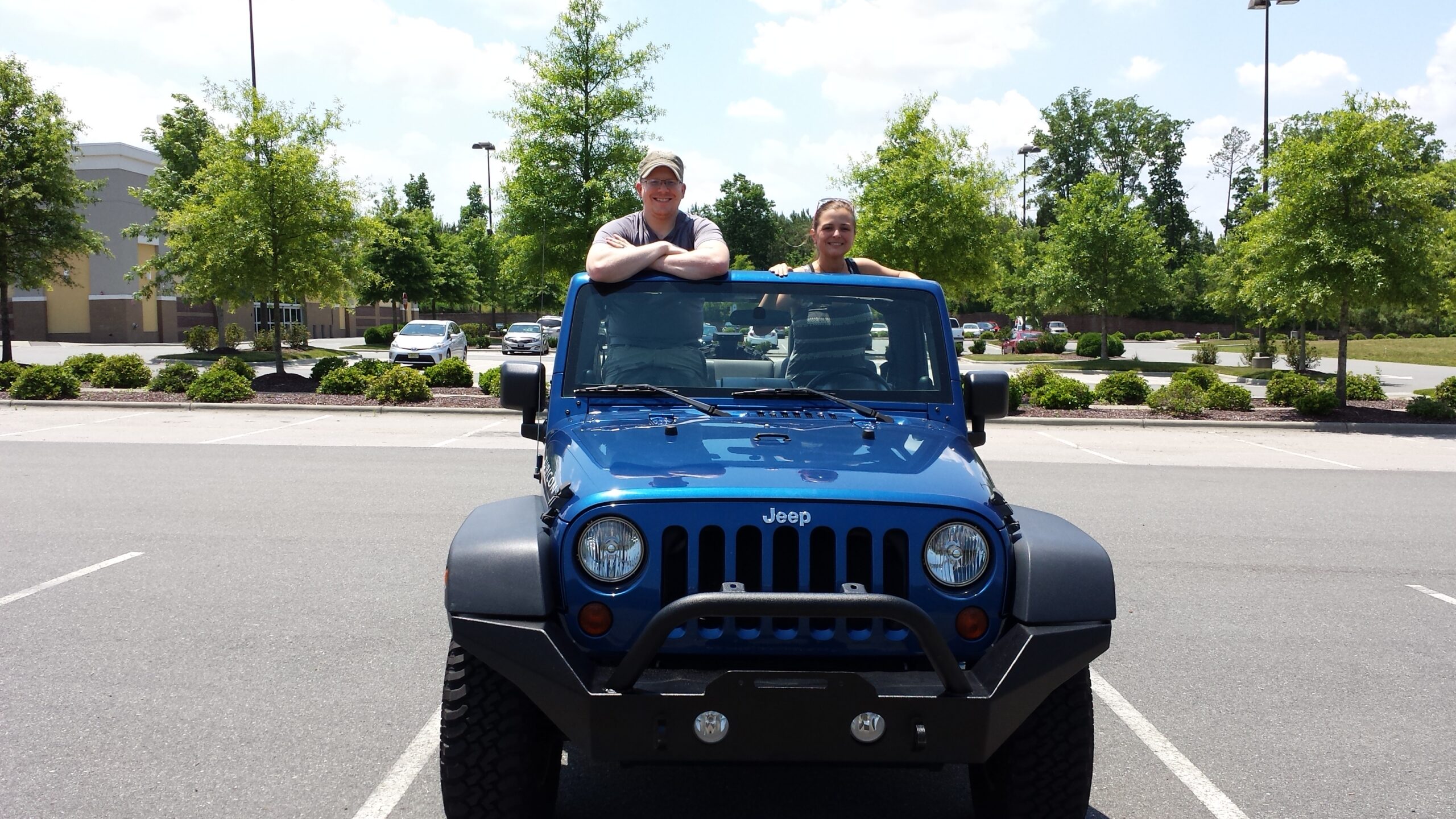
When we finally found the one, everything lined up. You can see it in the photo—the smiles say it all.
That Jeep became more than a vehicle. It became part of our life together. It carried us into the mountains we love, hauled gear, handled weather, and gave us confidence instead of anxiety. Years later, we’re still working on it, maintaining it, keeping it running—not because it’s the most modern thing on the road, but because we love it.
Some things are worth keeping.
And this Jeep is one of them.